How Saving Electricity Reduces Coal Usage Globally (Simple Explanation)

Electricity powers our modern lives—from lighting our homes to running businesses and charging our devices. But behind every switch you flip, there’s a complex global system working in real time.
Here’s the key idea most people don’t realize:
Saving electricity directly reduces how much coal is burned worldwide.
In this guide, we’ll explain in simple terms how this works, why it matters, and how your everyday actions contribute to global energy savings.
🔍 Quick Answer (Featured Snippet)
Does saving electricity reduce coal usage?
Yes. When electricity demand decreases, power plants generate less power. Since coal plants are often adjusted first, this leads to a direct reduction in coal consumption and emissions.
The Hidden Link Between Your Home and Power Plants
Every time you use electricity:
- Power plants increase output
- Fuel like coal, gas, or water is used
When you reduce usage:
- Demand drops
- Power generation decreases
- Less fuel is burned
This happens almost instantly.
Electricity cannot be stored easily at large scale, so:
Power must be generated exactly when it is used.
That’s why even small savings matter.
Why Coal Still Plays a Major Role
Despite growth in renewable energy, coal remains a major global electricity source.
Why coal is still used:
- Reliable for large-scale power generation
- Supports continuous electricity supply
- Existing infrastructure depends on it
Downsides:
- High carbon emissions
- Air pollution
- Environmental damage from mining
So when electricity demand drops, coal usage is often reduced first.
How Power Systems Work (Simple Explanation)
⚖️ Supply Must Equal Demand
At every second:
- Electricity generated = Electricity consumed
If this balance is disturbed:
- Too much supply → system instability
- Too little supply → power outages
That’s why systems constantly adjust.
Who Controls This Balance?
Electricity grids are managed by system operators such as:
- National Grid ESO
- PJM Interconnection
- ENTSO-E
They:
- Monitor demand in real time
- Predict usage patterns
- Control power plant output
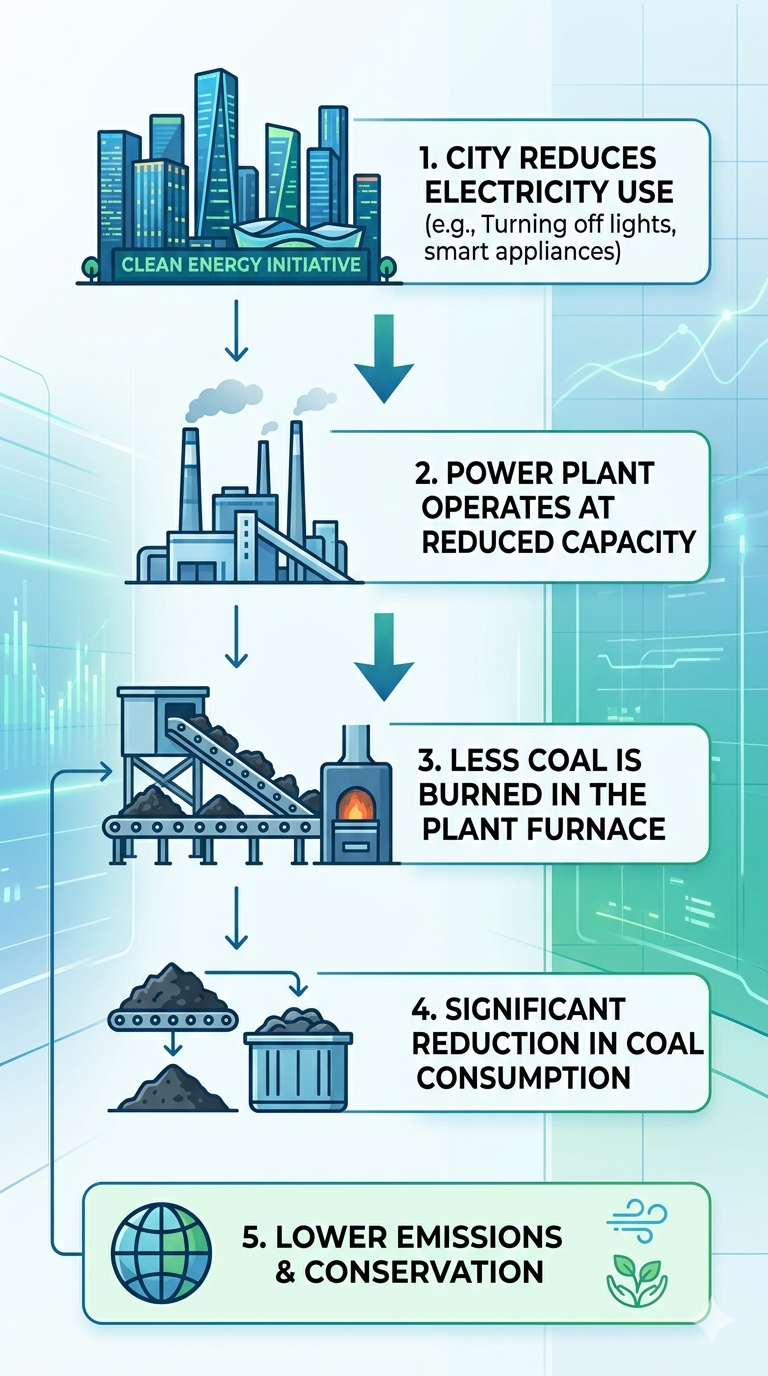
What Happens When You Save Electricity?
Here’s what happens step-by-step:
1. Demand Drops
Less electricity is used across homes and businesses
2. Grid Detects Change
Sensors detect reduced load
3. Frequency Increases Slightly
Indicates excess power
4. Operators Reduce Generation
Signals sent to power plants
5. Coal Usage Drops
Plants burn less coal
👉 This process happens in seconds to minutes.
Why Coal Is Reduced First
Power systems prioritize energy sources like this:
- Renewable energy (solar, wind)
- Nuclear power
- Coal and gas plants
Coal plants are more flexible than nuclear and are often reduced first.
So saving electricity usually leads directly to less coal burning.
Real Impact: How Much Coal Can Be Saved?
Let’s simplify:
- 1 unit (kWh) ≈ 0.4–0.6 kg of coal
If a city saves:
- 1,000,000 units/day
That equals:
- 400–600 tons of coal saved daily
Multiply globally → massive impact.
How Power Companies Track This
Electricity systems use advanced technologies:
SCADA Systems
- Real-time monitoring
- Data from thousands of sensors
Smart Meters
- Track usage patterns
- Provide detailed insights
Frequency Monitoring
- Detects imbalance instantly
These systems ensure:
Power generation always matches demand
Do Companies Track Individual Savings?
Not exactly.
They track:
- Total demand (city, region, country)
Your savings:
- Are part of a collective effect
- Become powerful at scale
Public Indicators You Can Check
Some regions provide:
- Live electricity demand dashboards
- Carbon intensity data
- Smart meter apps
What Is Carbon Intensity?
Carbon intensity measures:
- CO₂ emissions per unit of electricity
Example:
- High → more coal
- Low → more renewables
This helps people understand:
- Environmental impact of electricity usage
Demand Response: When Saving Matters Most
Utilities sometimes encourage saving during peak hours.
This is called demand response.
Examples:
- Notifications to reduce usage
- Lower electricity rates at night
- Incentives for reduced consumption
This helps:
- Avoid activating extra coal plants
- Reduce grid stress
Why Timing of Saving Matters
Peak Hours
- High demand
- More coal plants used
- Saving has maximum impact
Off-Peak Hours
- Lower demand
- Less immediate impact
Role of Renewable Energy
When renewables are high:
- Coal usage already low
- Savings still help indirectly
When renewables are low:
- Coal usage increases
- Saving electricity directly reduces coal
Future: Smart Grids and Real-Time Feedback
Future systems will:
- Show real-time energy savings
- Estimate coal reduction
- Provide user-friendly insights
Example:
“You saved 5 kWh → avoided 2 kg of coal.”
This will make energy saving more engaging and measurable.
Simple Ways to Save Electricity
At Home
- Turn off unused devices
- Use LED lighting
- Optimize AC usage
- Unplug idle chargers
Appliances
- Use energy-efficient models
- Run full loads
- Reduce unnecessary usage
Awareness
- Avoid peak-time usage
- Monitor consumption
- Educate family members
Why This Matters Globally
Saving electricity helps:
- Reduce coal consumption
- Lower carbon emissions
- Improve air quality
- Support sustainable energy systems
Final Thoughts
Saving electricity is one of the easiest ways to make a real-world impact.
No investment. No complexity.
Just simple habits.
Because every unit saved means: 1win juegos
- Less demand
- Less generation
- Less coal burned
Key Takeaway
Saving electricity is not just about reducing your bill—it’s about reducing global coal consumption and protecting the environment.